My research explores the physics of compact objects across a wide range of length scales, from the microscopic behaviour of matter at extreme densities, to the global dynamics of neutron star crusts and magnetospheres. I develop theoretical and computational models that connect dense matter physics, plasma physics, and radiation physics with astronomical observations.
Relativistic Plasmas
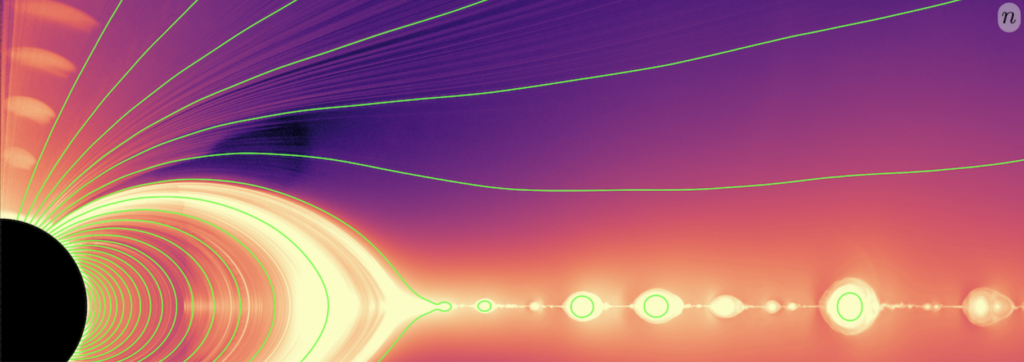
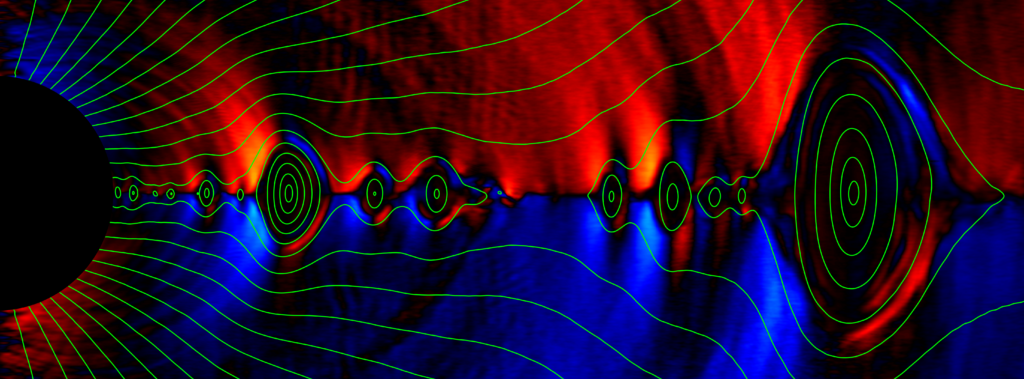
Neutron stars and black holes are surrounded by magnetized plasmas that accelerate particles to relativistic energies and power some of the most luminous phenomena in the Universe. I use first-principles kinetic plasma simulations to investigate how these magnetospheres generate particle acceleration, radiation, and the coherent radio emission observed from pulsars. A particular focus of my work is understanding how plasma processes couple to the evolving interior of neutron stars, providing a physical link between dense matter and observable radiation.
Extreme Solids
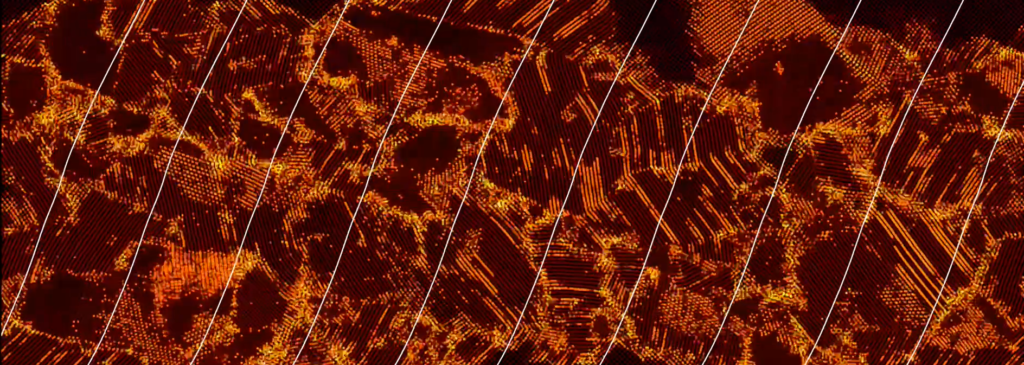
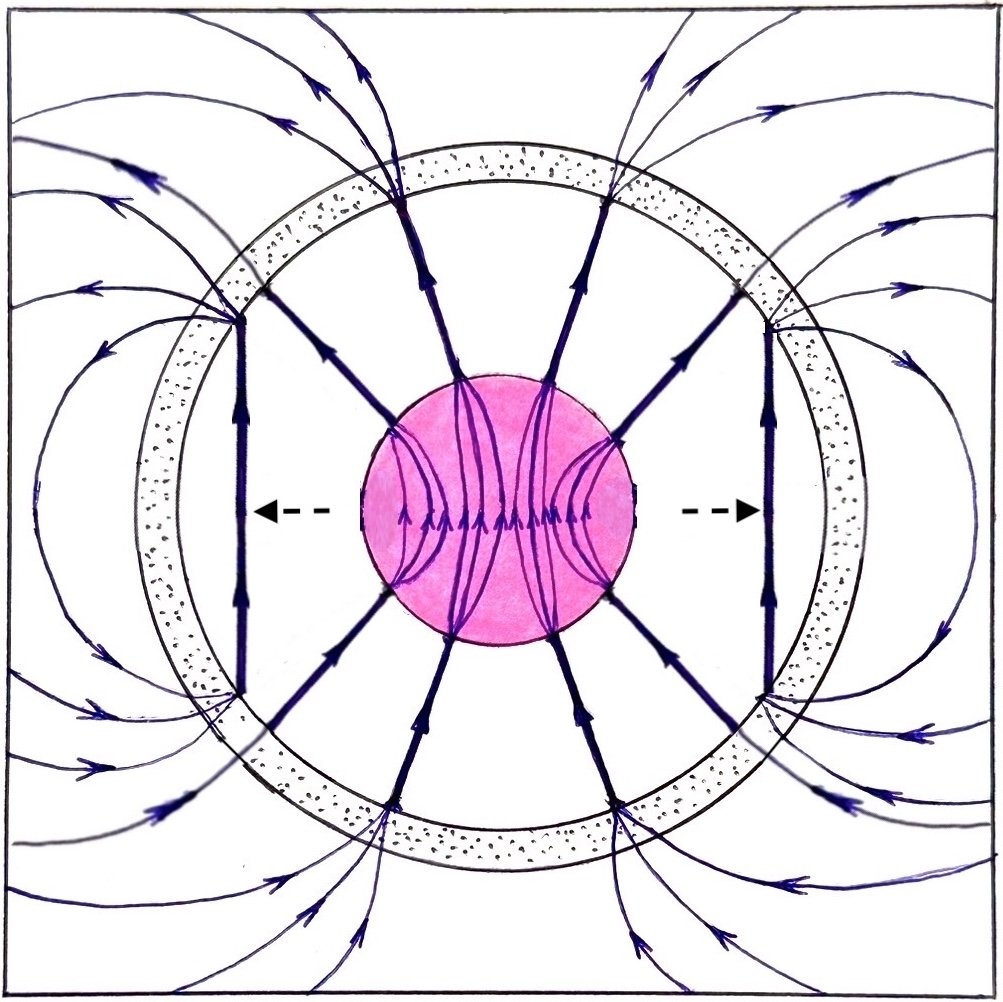
The solid crust of a neutron star is the strongest known material in the universe, and it is continually stressed by ultra-strong magnetic fields. Using first-principles molecular dynamics simulations, I investigate how neutron star crusts deform, fracture, and flow at the microscopic level. These simulations provide the physical ingredients needed to build global models of the crust and its dynamics. Ultimately, this work aims to reveal how crustal failures couple to the magnetosphere, triggering magnetar flares, pulsar glitches, and driving the long-term evolution of neutron stars.
Ultra-Strong Magnetic Fields
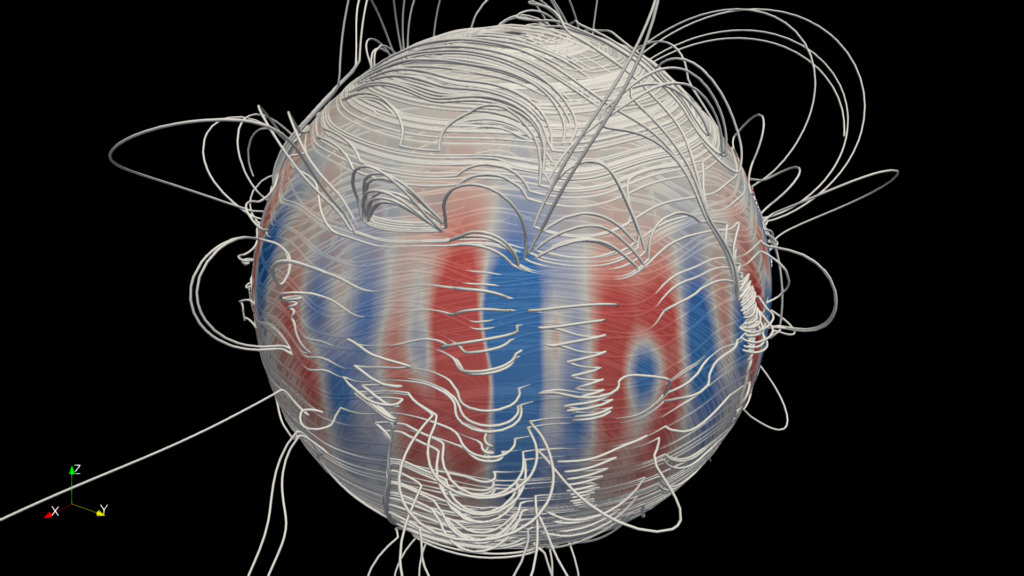
Neutron stars possess the strongest magnetic fields in the universe, making them unique laboratories for magnetohydrodynamics under extreme conditions. My research investigates how these fields evolve over millions of years through exotic effects such as proton superconductivity and neutron superfluidity. Understanding magnetic field evolution is essential for connecting neutron star interiors with their observable emission and spin evolution.
Phase Transitions and Exotic Matter
The enormous densities in neutron star cores may give rise to exotic phases of matter that cannot be produced in terrestrial laboratories, including deconfined quark matter and color-superconducting phases. I investigate how these phase transitions modify magnetic fields, transport properties, and stellar dynamics, with the goal of identifying observational signatures that reveal the composition and behaviour of matter at the highest known densities.